
If you’ve spent any time in a home studio or production environment, you’ve almost certainly owned, used, or at least been recommended the iconic Audio-Technica ATH-M50x. I’ve owned at least a couple of pairs over the last 15 to 20 years, and they’ve landed on many of my best-of lists for closed-back headphones. Tracking and producing on them is an absolute blast because they sound full and exciting.
But if I’m being completely honest with you? They’ve never been my first choice for mixing and mastering.
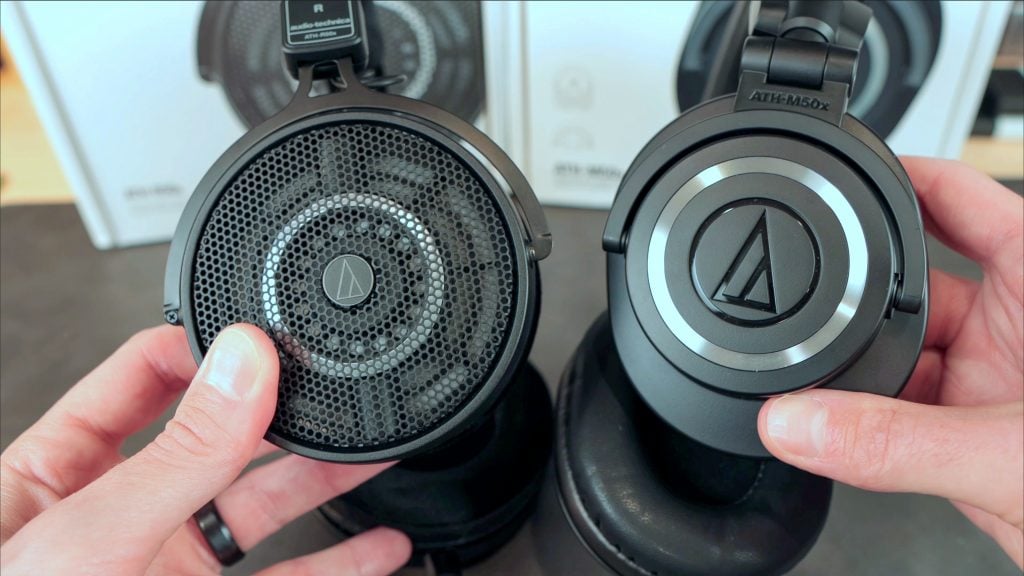
So when Audio-Technica announced the ATH-R50x, a brand-new open-back headphone coming in at under $200, I was genuinely curious. Could these provide the accuracy, clarity, and spatial depth I rely on from open-backs during critical sessions? I spent the last month putting them through their paces exclusively in my studio for everything from mixing and mastering to everyday listening. Here is how they actually stack up.
(Full disclosure: Audio-Technica did sponsor this video review, but as always, these are my completely honest opinions after a month of heavy studio use.)
First Impressions: Lightweight, Breathable, and Minimal
The very first thing I noticed when taking the R50x out of the box was just how light they feel. Coming in at right around 7 ounces, they lose that clunky, heavy vibe that a lot of closed-back headphones have. When you put them on, it almost feels like they aren’t even there.
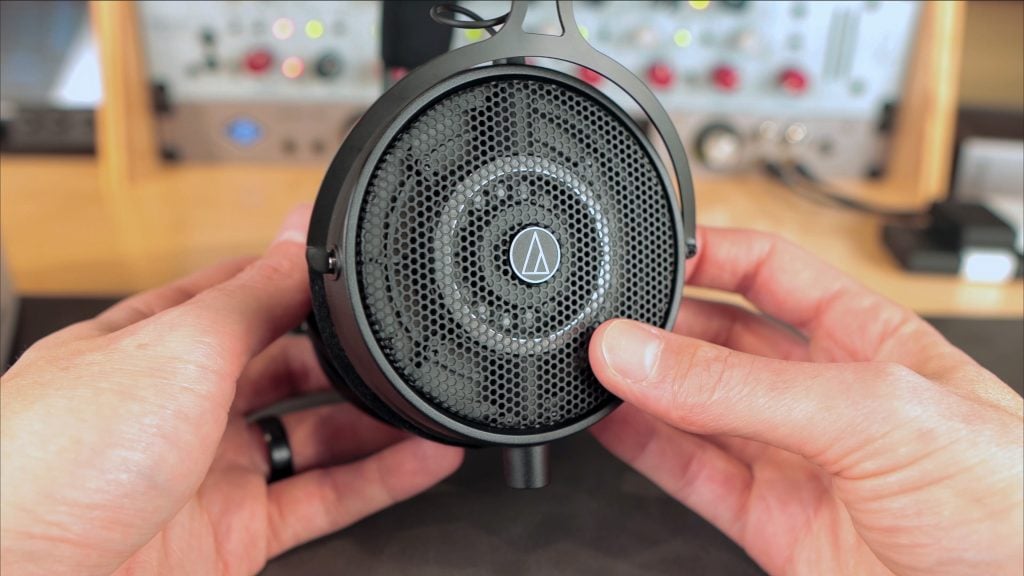
Looking through the open metal grill on the side, you can actually see the 45mm driver sitting in there. That open-air design makes a world of difference for long studio sessions:
- The Ear Pads: Audio-Technica went with soft velour pads here. Normally, velour can trap heat, but because the ear cups are open-back, you get incredible airflow. It’s the best of both worlds: soft plush comfort without your ears turning into a sauna.
- The Headband: The top of the headband is perforated, which gives it a ton of flexibility. There’s almost zero clamping force or side-head pressure. Instead of a thick, heavy band, they opted for two minimal pads up top to keep the overall weight down.
- The Cable System: You get a detachable left-side cable that locks in with a quick counterclockwise twist, so you won’t accidentally pull it out mid-take. They ship it with two cables in the box: a longer studio cable with a 1/4-inch adapter, and a shorter 3.5mm cable for plugging into your laptop, phone, or tablet.
My One Build Criticism
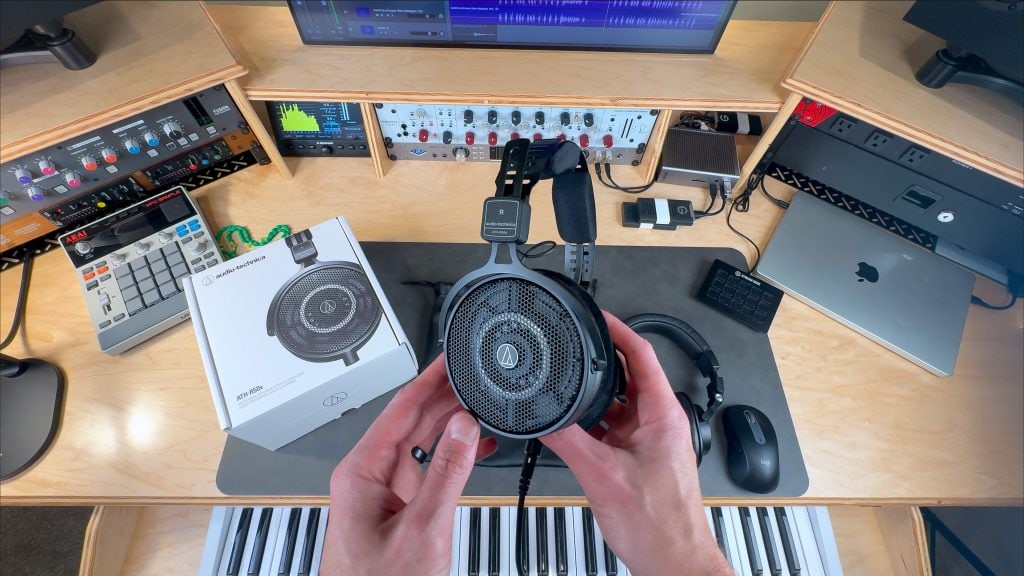
I do have one gripe with the build, and that’s the headband height adjustment. The click mechanism on the ear cup brackets is pretty finicky, and there are no numbered indentations or visual guides to help you match both sides evenly. Getting them perfectly symmetrical takes a little extra effort. The good news is that once you set them and put them on your head, they don’t slip or shift around. You just have to do a bit of extra dialing in at first.
The Sound: How Do They Perform for Mixing & Mastering?
The moment you put these on, the sensation is totally different from a closed-back headphone. It feels much more natural, almost like sitting in a room listening to a good pair of studio monitors rather than having sound trapped inside your head.
Wide Stereo Imaging & Separation
The biggest leap moving from an M50x to an R50x is the stereo soundstage. The spatial separation is wide and open, making it significantly easier to place vocals and instruments, dial in reverb spaces, and make precise panning choices in a mix.
Accurate Low End (Down to 30 Hz)
If you’re expecting that punchy, hyped sub-bass of the M50x, you won’t find it here. The R50x doesn’t push a forced low-end punch, but what it does give you is accuracy down to 30 Hz. It’s clean, uncolored, and (most importantly) it translates outside the studio. Judging bass levels on these is just so much easier, which is huge if you want your mixes to translate properly to car speakers or consumer earbuds.
Nuanced Mids & Smooth Highs
A lot of people focus strictly on bass and treble, but for mixing and mastering, the mid-range is where the real work happens. The R50x excels here. Vocals and instruments feel lifelike and detailed, making it effortless to catch harsh sibilance or dial in light compression. Up top, the high end is detailed enough but noticeably smoother and less aggressive than the M50x, meaning far less ear fatigue over extended sessions.
Powering the R50x & Studio Practicality
At 50 ohms, you don’t need a super heavy-duty headphone amp to drive these. They hook up fine to standard audio interfaces, as well as laptops and mobile devices. I did notice I had to push my interface volume knob a little bit higher than I usually do for high-efficiency closed-backs, but it’s well within normal range.
A Quick Reminder on Open-Backs: Because these are open-back, they offer zero isolation. Sound will leak out, and ambient room noise will get in. If you need privacy or are recording vocals or acoustic instruments in front of a live microphone, stick to a closed-back so you don’t get bleed into the mic. But for sitting at your desk, editing, producing, mixing, or mastering? The open-back design is the way to go.
Final Thoughts
The Audio-Technica ATH-R50x bridges a massive gap in the sub-$200 market for open-back headphones. While the ATH-M50x remains a great tool for production, tracking vocals and recording instruments without mic bleed, the ATH-R50x is a far superior choice for mixing, mastering, and critical listening.
With an ultra-lightweight design, excellent breathability, and an accurate, uncolored low end, they deliver pro-level performance that easily punches above their price tag.
I’ll be keeping you posted on how these hold up over long-term daily use in the studio, just like I do with all the gear in my studio. If you have any questions about how these compare to other headphones I’ve reviewed, feel free to let me know.